


The honest answer: the cost of building a 3D virtual space for a business usually lands somewhere between a few thousand and several hundred thousand US dollars, and the range is that wide because “a 3D virtual space” can mean a single product configurator embedded on one web page or a persistent, multi-user world with live events, avatars, and back-end integrations. Before anyone can quote you a number, the real question has to be answered first: what problem is the space supposed to solve, and for how many people at once? This article breaks down what actually drives the price, so you can size a budget that matches a business goal instead of a wish list.

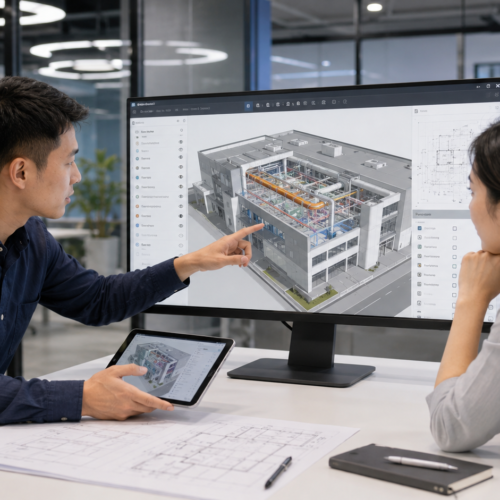
A 3D virtual space is an interactive digital environment that people navigate in three dimensions — moving through it, looking around, and interacting with objects — usually inside a web browser, a mobile app, or a VR headset. For a business, it is not a game and not a marketing gimmick; it is a place where a specific job gets done: a showroom where customers configure and view a product at real scale, a virtual booth that replaces or extends a trade-show presence, a training environment where staff practice a procedure safely, or a branded world where a community gathers. The defining trait is spatial interaction. If a flat video or a slideshow would do the job just as well, you do not need a 3D virtual space, and paying for one would be waste.
Cost is driven far more by scope, concurrency, and content volume than by “how good the graphics look.” Five factors move the number more than anything else:
A useful way to picture the cost of building a 3D virtual space is by tier. The figures below are planning ranges for scoping conversations, not fixed quotes — your context can move them.
|
Tier |
What it typically includes |
Planning range (USD) |
Realistic timeline |
|
Entry — single-scene, web-embedded |
One environment or product viewer, no login, no multiplayer, library or lightly customised assets |
$5,000 – $20,000 |
3 – 8 weeks |
|
Mid — branded interactive space |
Several rooms/zones, custom models, simple analytics, single-user or small groups, one main platform |
$20,000 – $80,000 |
2 – 4 months |
|
Advanced — persistent multi-user world |
Real-time multiplayer, avatars, voice, events, CRM/commerce integration, multi-platform |
$80,000 – $300,000+ |
4 – 9 months |
Notice that timeline scales with the same factors as price. A space is a software product, and software has a floor below which quality and stability suffer no matter how small the budget.

The build price is only part of the total, and the part most proposals quietly leave out is what it costs to keep the space alive. A 3D virtual space is not a printed brochure you pay for once. Plan for these recurring lines from day one:
A reasonable rule of thumb is to budget yearly running costs at roughly 15 to 30 percent of the original build, higher if the space is multi-user and updated often. Ignoring this line is the single most common reason a promising project stalls after launch.
Start by writing down the one measurable outcome the space must produce, then scope backwards from it. Almost every budget overrun begins with a feature list instead of a goal. If the outcome is “let remote buyers configure our machine and request a quote,” you do not need avatars, voice chat, or a persistent world — you need a clean single-scene configurator wired to your quote form, which sits in the entry-to-mid tier. Use this sequence to keep the number honest:
It is not the right time when you cannot name the problem it solves or the metric it moves. A 3D space is a poor fit if your audience mostly needs quick, scannable information — a fast, well-designed web page beats a 3D scene for reading specs or prices. Hold off if your product or catalogue is changing so fast that content would be outdated before it launches, if you have no plan or budget for the ongoing costs above, or if the request is essentially “our competitor has one.” Novelty attention fades within weeks; a space built only to look impressive becomes an expense no one maintains. The right time is when spatial interaction genuinely helps someone understand, decide, or learn something a flat medium cannot convey as well.
A dependable build moves through five stages, and skipping any of them tends to show up later as rework, which is itself a cost. Understanding the stages helps you read a quote and know what you are paying for:
The prototype stage is where a good partner earns their fee. Proving the risky part early, on a small budget, is how you avoid discovering a fundamental problem after most of the money is already spent.
Measure it against the single outcome you defined at the start, not against how many people said “wow.” Tie the space to numbers your business already tracks: qualified leads generated, sales-cycle time shortened, cost per trade-show equivalent, training hours saved, or engaged sessions that lead to a next step. Instrument the space with analytics before launch so you can see where people enter, what they interact with, and where they drop off. A space that produces even a handful of qualified enterprise leads, or replaces the recurring cost of physical demos and travel, can pay back a mid-tier build quickly. A beautiful space with no measurement plan can never prove its value, which is why measurement is part of the scope, not an afterthought.
Most cost blowouts come from a handful of avoidable decisions:
SAVA META starts from the business problem and the smallest version of a space that can solve it, then grows from evidence. We do not sell 3D because it looks impressive; we build it when spatial interaction does a job a flat medium cannot. In practice that means our scoping conversation begins with your goal and your success metric, not a feature catalogue, and our first serious deliverable is usually a prototype of the riskiest interaction so both sides can see it work before committing to full production. We are candid when a landing page, a video, or a simpler tool would serve you better and cost less — that honesty protects your budget and our credibility.
Because SAVA works across Metaverse and interactive digital space, VR/XR, game development, and AI, we can match the engineering to the job rather than forcing every project into one template. We plan for the running costs openly, design the first phase to ship and teach us something real, and make sure you own your assets and understand what maintenance will take. The aim is a space that earns its keep against a number you chose, not a showpiece that impresses once and then quietly costs money.
The cheapest genuinely useful version is a single-scene, web-embedded experience such as a product viewer or configurator, typically in the $5,000–$20,000 range. It has no login and no multiplayer, loads in a browser, and does one clear job well. It is the ideal way to test whether spatial interaction actually helps your audience before investing in anything larger.
Quotes vary because “3D virtual space” describes everything from a one-object viewer to a persistent multi-user world, and those differ by orders of magnitude in engineering effort. The biggest single fork is concurrency: real-time multiplayer with avatars and voice requires networking and server infrastructure that a single-user viewer does not. Always compare quotes against a written scope, not a label.
An entry-tier space takes roughly 3–8 weeks, a mid-tier branded space 2–4 months, and an advanced multi-user world 4–9 months or more. Timeline scales with the same factors as cost — custom content, concurrency, and integrations. A trustworthy plan includes a prototype milestone early so you see the core working before full production.
No. Most business 3D spaces run in an ordinary web browser or mobile app, which reaches far more people and costs less to build and support. VR is worth adding only when the immersion genuinely improves the outcome, such as certain training or design-review scenarios. Treat a headset build as an optional phase, not a default requirement.
Plan for hosting and content delivery, real-time server costs if the space is multi-user, content updates, device and browser compatibility maintenance, support and moderation, and any third-party licensing. A practical estimate is 15–30% of the build cost per year. Budgeting this from the start is what keeps a space alive instead of letting it decay after launch.
Define one measurable outcome before building — leads, shortened sales cycles, training hours saved, or demo-and-travel costs avoided — and instrument the space with analytics to track it. Judge the result against that number, not against how impressive the space looks. A modest space tied to a real metric beats an elaborate one no one can evaluate.
The cost of building a 3D virtual space is only answerable once you know what problem it solves and for how many people at once. Get those two things clear and the budget stops being a guess and becomes a decision. If you are weighing whether a 3D virtual space fits your business — and roughly what it should cost — SAVA META can help you scope it around a real goal and a real number, and tell you honestly if a simpler path serves you better. Reach us at [email protected] to start a scoping conversation.
Bài viết liên quan