


VR training is a way of teaching people a skill by placing them inside a computer-generated 3D environment where they can practise the real task with their own hands, decisions, and mistakes — before those mistakes cost anything in the real world. When people ask “what is VR training”, they usually mean this: employees put on a headset, step into a realistic scenario — a factory line, a hospital ward, a customer conversation, a fire evacuation — and learn by doing, again and again, until the behaviour sticks. It is not a video you watch. It is a situation you live through.
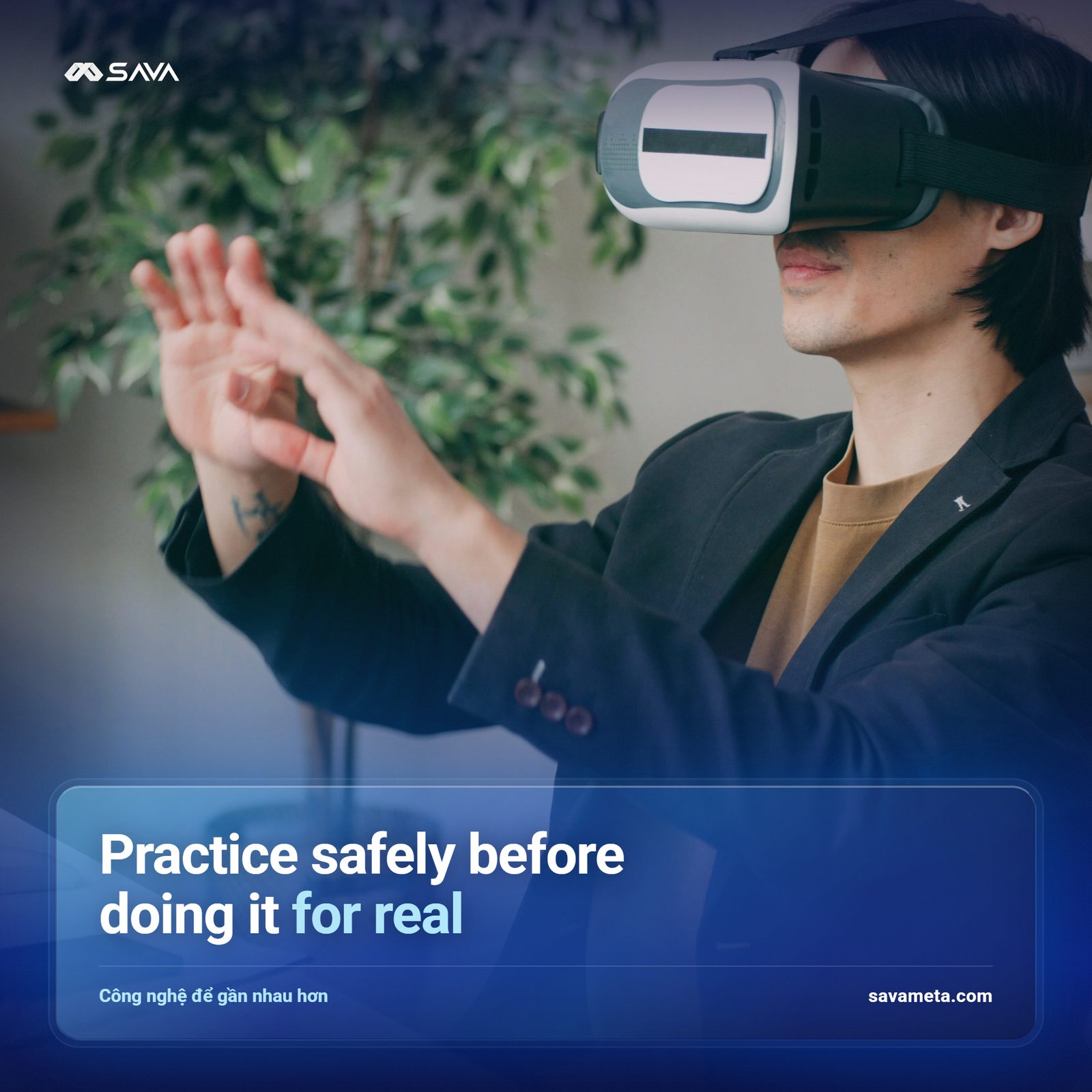
VR training is structured, repeatable skill practice inside an immersive virtual environment, where a learner performs a task and receives feedback on their actions. The headset tracks where they look and what they do with their hands; the software responds like the real world would. That single property — your actions have consequences inside the scene — is what separates VR training from a slideshow, an e-learning module, or a training video.
Three things usually have to be present for it to count as real VR training and not just a 360-degree tour:
Take those away and you have a demo. Keep them, and you have a training tool that changes how quickly and how confidently people learn.
VR training solves the problem of practising things that are too dangerous, too expensive, too rare, or too disruptive to rehearse in real life. That is the honest test. Not every subject needs a headset — but some subjects are almost impossible to teach well without one.
Consider the situations where classroom slides and on-the-job shadowing fall short:
In each of these, VR gives people repetitions they simply cannot get any other way. A new technician can make the same mistake twenty times in a virtual plant on Monday and never make it once on the real floor.
VR training works by turning a real procedure into an interactive scenario, then letting learners run that scenario until they master it. The technology matters less than the design of the task inside it. A typical flow looks like this:
The headset is the last thing to worry about, not the first. A well-designed scenario on a modest standalone headset beats a beautiful environment with nothing to do inside it.
Start with one painful, repeatable, high-stakes task — not with a headset order. The most common way VR training fails is that a company buys hardware first and then goes looking for something to put on it. Reverse that order.
A grounded starting point usually meets several of these criteria:
Pick one such task, build a single strong scenario, put it in front of real employees, and measure whether they perform better afterwards. One proven pilot is worth more than a broad rollout nobody trusts yet.
VR training is the wrong tool when the problem is not actually a training problem, or when the task has no physical or spatial dimension to justify immersion. Being honest about this is part of doing it well.
Hold off — or choose a simpler method — when:
Saying “not yet” to VR in these cases builds more trust than forcing it. The goal is people who can do the job, not a headset on every desk.
VR training trades higher upfront build effort for repeatable, low-risk, hands-on practice at scale. It is not simply “better” than everything else — it sits in a specific place among the options. The comparison below is a rough guide, not a rule.
|
Method |
Learn by doing? |
Cost to run each session |
Best for |
|
Classroom / slides |
Low |
Low |
Concepts, background knowledge, discussion |
|
Training video |
No (watch only) |
Very low |
Showing a procedure, awareness |
|
On-the-job shadowing |
High |
High (ties up staff & equipment) |
Real context, but risky and hard to standardise |
|
VR training |
High |
Low once built |
Dangerous, expensive, or rare hands-on tasks |
The pattern is clear: VR earns its place where you need people to practise a physical or high-pressure task many times, safely, without tying up the real workplace each time.
You measure VR training the same way you would measure any training — by whether behaviour and outcomes change on the job — plus the rich activity data the simulation records for free. Immersion is not the result. Better performance is.
Useful things to track include:
If a program cannot show movement on at least one of these, the problem is usually the scenario design or the choice of task — not VR as a category.
The most common mistake is treating VR training as a technology purchase instead of a learning design problem. Almost every disappointing rollout traces back to that. Watch for these traps:
SAVA META approaches VR training as a business problem first and an immersive experience second. We start from a simple question — which specific task is costing you time, money, or safety because people cannot practise it enough? — and we are willing to tell you when VR is not the answer. Our work spans Metaverse and interactive digital space, VR/XR, game studio production, game publishing, and AI solutions, and we bring that production discipline to training rather than treating a headset as the goal.
In practice, that means a few commitments:
We do not build VR to show that we can. We build it to step into a real problem, because a training tool that nobody uses is worth nothing, however impressive the demo looked.
The main cost is building the scenario, not running it. A custom simulation takes design and development effort upfront, but once built it can train many people at very low cost per session — no production line stopped, no materials consumed, no trainer tied up. It becomes cost-effective when the task is repeated often or when real-world practice is dangerous or expensive.
People tend to learn hands-on, physical, and high-pressure tasks well in VR because they practise by doing rather than watching, and they can repeat the task safely until it becomes second nature. For purely factual content — policies, figures, definitions — a document or quiz usually works just as well and costs far less.
For most workplace training, a standalone headset that needs no external computer or cables is enough to begin. The bigger requirement is operational: someone to charge, clean, update, and look after the devices. Start with a small number of headsets for a single pilot rather than equipping everyone at once.
It depends on the complexity of the task, but a focused, single-scenario pilot is far faster to produce than a full simulation of an entire role. Scoping tightly around one critical task is the main way to keep the first project short and to learn quickly before investing further.
Yes, but the effort depends on how the scenario was built. Small changes to steps or feedback are usually straightforward; rebuilding an entire environment is not. If your procedure changes very frequently, that is a signal to keep the scenario simple, or to ask whether a lighter method fits better.
No. What matters is whether you have a repeatable, high-stakes task worth practising, not the size of the company. A smaller organisation with one genuinely dangerous or costly task can get more value from a single well-built scenario than a large company that spreads its effort too thin.
If you have a task that is hard to practise safely, and you want a straight answer about whether VR training is the right tool for it, that is exactly the conversation we like to have. Tell us the problem before you think about the headset. Reach the SAVA META team at [email protected] and we will help you decide whether to build, pilot, or wait.
Bài viết liên quan