


A 3D space can impress people in the first few seconds. But users still leave quickly if they do not know what they are supposed to do, who else is present, or what should happen after they look around. For brands, communities, or learning teams, the friction is rarely “we need a prettier world.” The more useful question is whether the space creates a reason to participate.
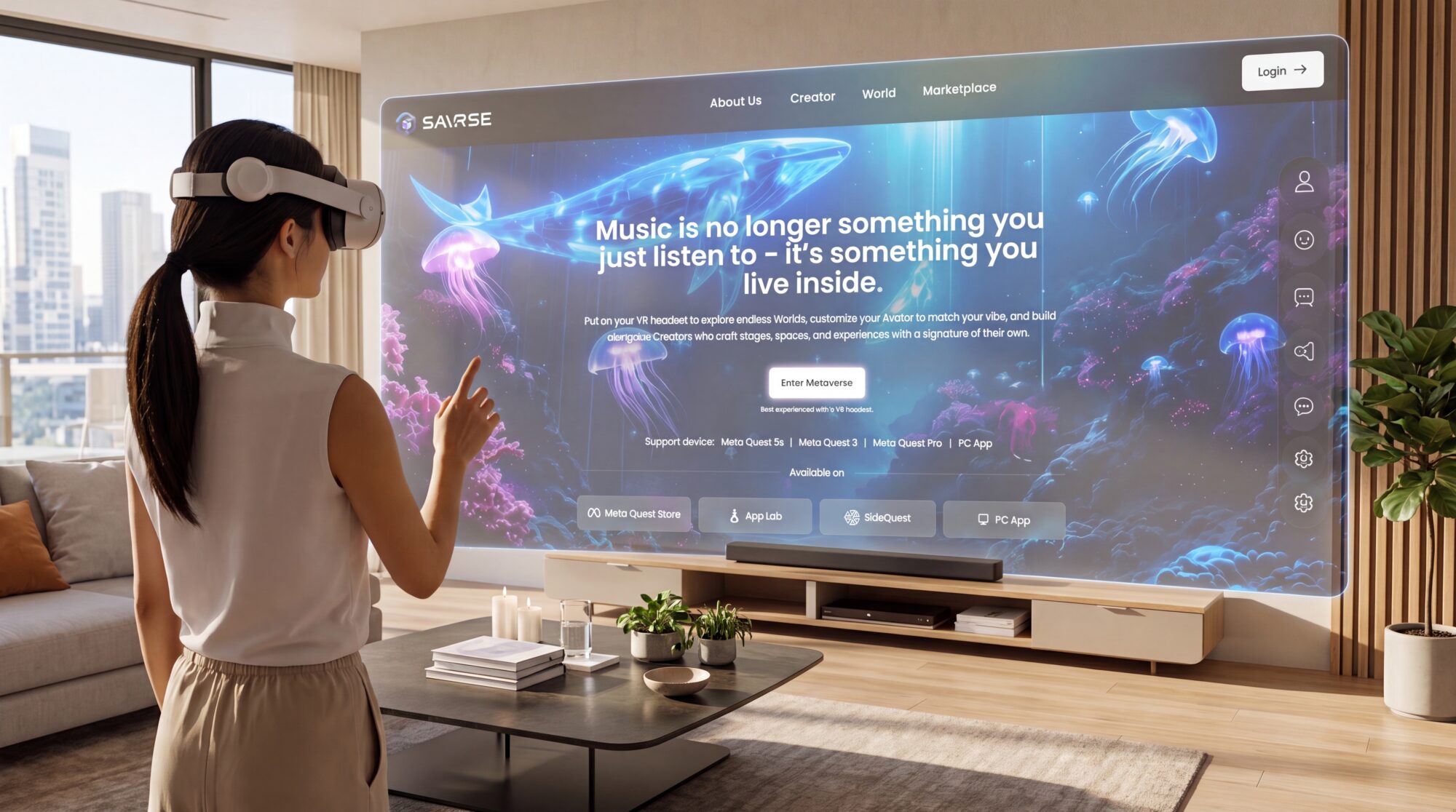
SAVRSE is a platform developed by SAVA that allows users to appear through avatars, explore 3D worlds, and take part in activities with a community layer. The most relevant use cases are not about placing users inside a static scene. They are about shaping a journey where presence, interaction, content, and operating rules work together.
Content classification: Product Proof plus reference application direction. SAVRSE is a product proof for SAVA’s Interactive Digital Spaces capability. The use situations described in this article are illustrative directions, not public client case studies. Product scope, supported devices, creator rights, session size, and operational conditions should be confirmed by Product or Tech before proposal use.
People do not participate just because a digital space looks new. They participate when they understand where they are, what the main activity is, who else is present, and how each action moves the experience forward. A spatial interface creates possibility, but it does not automatically create meaning.
That is why the design should begin with a behavior: joining a launch session, exploring a topic, meeting a community, completing a shared task, or moving through a guided event. The world, avatar system, and interaction layers should come after that behavior is clear. If the experience has no core activity, the user is left with a beautiful but empty room.
SAVRSE is positioned around several visible layers: account access, avatar presence, world exploration, creator-oriented content, and community activity. These layers make it different from a simple 360 tour or a one-way 3D presentation.
These descriptions should not be stretched into claims about user scale, concurrent session capacity, creator monetization, moderation readiness, or device compatibility unless those points are confirmed by the current product team.
A useful journey should be short enough for a first-time user to understand and open enough for repeat participation. The simplest version may look like this:
Not every project needs all of these steps. The important point is that users should always understand their current action and the next available move.
Imagine an organization that wants to host a digital gathering for a creative community. Participants join from different places, may be new to the platform, and care about different parts of the theme. If they are placed into a 3D lobby with no journey, most of the session is spent finding their way or waiting for instructions.
In a more structured approach, users choose avatars, receive the purpose of the session, and select one of several content paths. Each path contains a stop where they can view work, hear a presenter, or complete a short task. When deeper discussion is needed, the journey moves them to a facilitated area instead of asking them to search for the right person. This is an illustrative operating pattern, not a claim about a SAVA-published event.
A single-user 3D tour mainly needs to load the right scene and respond to one person’s actions. A multi-user experience has to handle presence, synchronization, voice or gesture cues, rules of behavior, and shared context. The moment another person enters the same world, the space becomes a product and community operation problem, not just a visual production task.
Users need to know who can talk to them, who can create or modify content, what happens when someone behaves badly, and how they can get support. That makes moderation, support, onboarding, and accessibility part of the product scope. The social layer should not be treated as a technical checkbox.
SAVRSE becomes relevant when the activity needs avatars, shared presence, spatial context, or creator participation. It may be too much if a video, website, webinar, or simple 360 tour already answers the user’s need.
Value should be measured by meaningful completion, not just logins or headset time. Useful metrics may include onboarding completion, first-world entry, task completion, successful participation in a session, points where users drop off, and support requests related to navigation or comfort.
There is no public evidence in this content set to claim retention, community scale, or commercial performance. Any KPI should be defined against the world, activity, user group, and measurement permission of a specific implementation.
SAVA META’s role is to help teams decide whether they need a participatory world, a simpler virtual tour, or another digital format. The starting point is not the platform feature list. It is the activity that should become clearer, more engaging, or more useful for real users.
If your team is considering SAVRSE or a multi-user Interactive Digital Space, start with one journey: who enters, what they do first, what they should understand, and what action proves the space is useful.
Related Post